
AI Explainability Risk and Transparency Controls: Why U.S. Organizations Can No Longer Deploy What They Cannot Explain
The CFPB, SEC, FINRA, and FTC are converging on the same position: the black-box defense is dead. If you cannot explain an AI system’s decisions, you cannot deploy it in high-impact contexts. “Companies are not absolved of their legal responsibilities when they let a black-box model make lending decisions. The law gives every applicant the […]
AI Governance Risk vs. AI Technical Risk: Why U.S. Organizations Need Both and How They Work Together
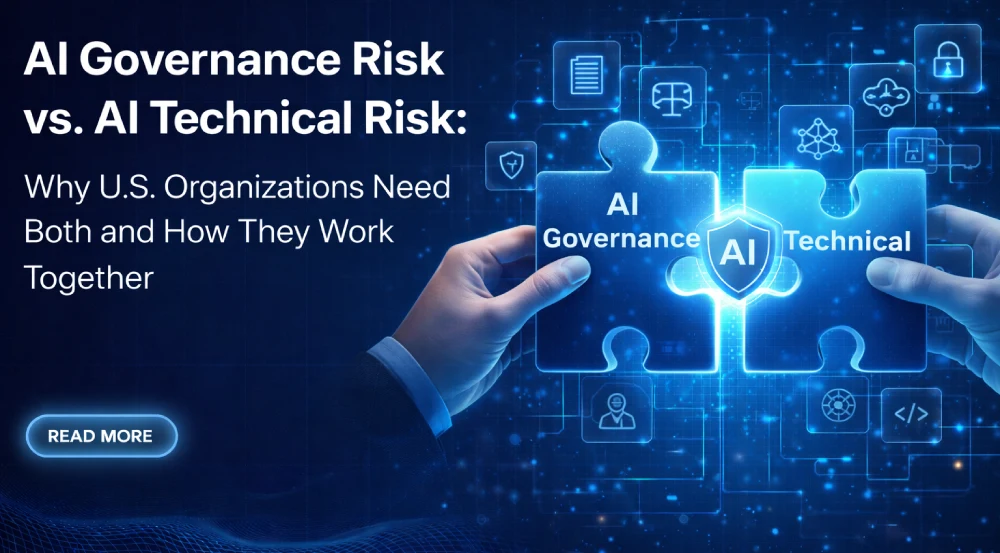
48% predict governance failures will trigger the next AI breach. Only 6% have complete visibility into AI usage. Technical controls without governance have no authority. Governance without technical capability has no teeth. Here is how to integrate both. The dual gap: 48% predict governance failures (shadow AI, over-permissive access) will trigger the next major AI breach. […]
AI Risk Identification Checklist: A Complete Guide for U.S. Organizations
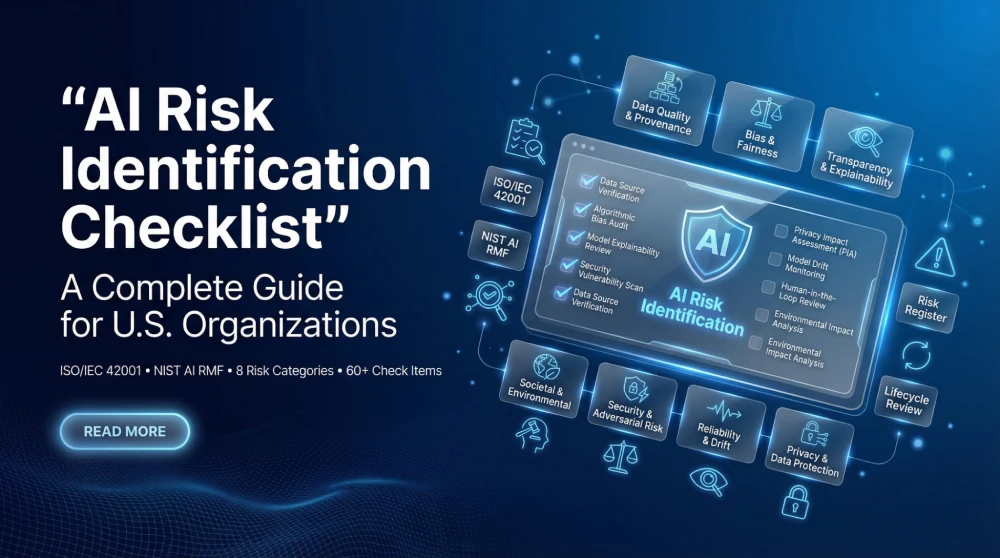
McKinsey reports that 78% of companies now use generative AI in at least one business function. Yet the Infosys Knowledge Institute found that only 2% of enterprises meet responsible AI gold standards. The gap between those two numbers represents organizations deploying AI systems without a systematic process for identifying the risks those systems introduce. Risk […]
AI Risk Scoring Models: Qualitative vs. Quantitative Approaches for U.S. Organizations
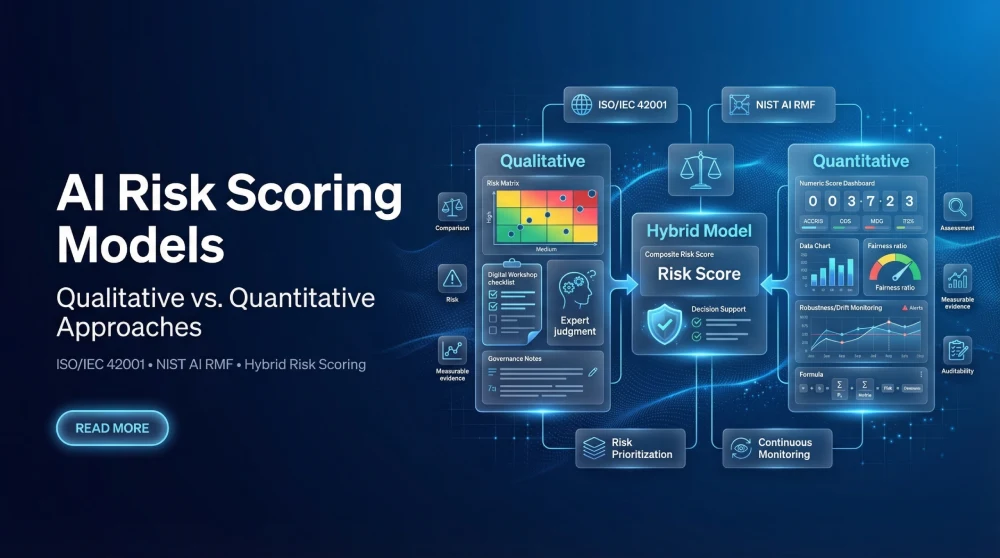
Researchers at IBM, the Partnership on AI, and several leading universities have catalogued hundreds of metrics for quantifying AI risk, covering everything from fairness and robustness to explainability and privacy. Yet most AI risk assessments conducted by U.S. organizations today still produce the same output: a consultant’s report labeling systems as “High,” “Medium,” or “Low” […]
How to Conduct an AI Risk Assessment: A Practical Guide for US Organizations
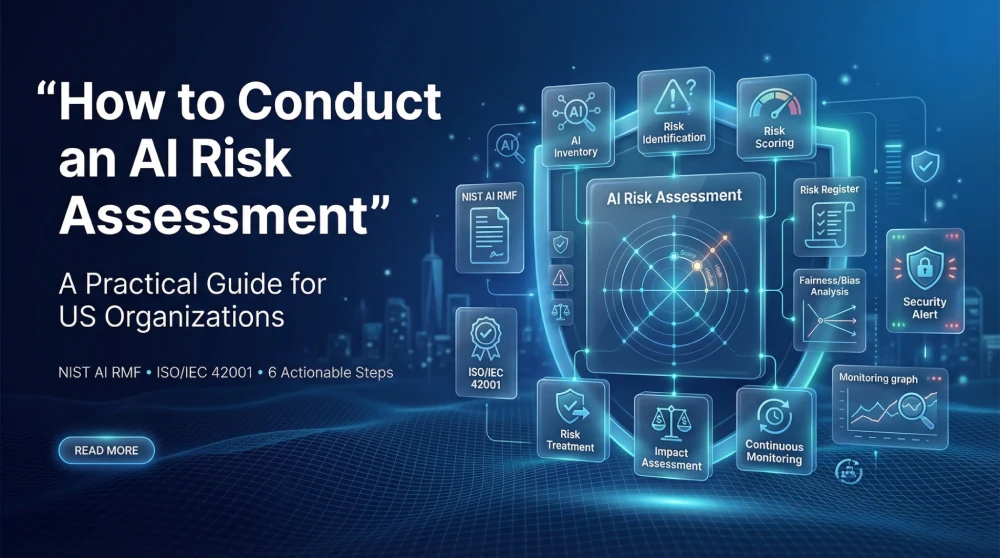
A federal judge conditionally certified a national class action in Mobley v. Workday, Inc. after plaintiffs argued that AI-powered screening tools produced discriminatory outcomes against applicants over 40. In a separate case, a Canadian tribunal held Air Canada liable when its chatbot gave a customer inaccurate refund information. Both incidents share a root cause: the […]
EU AI Act Risk Classification Explained: What US Companies Need to Know
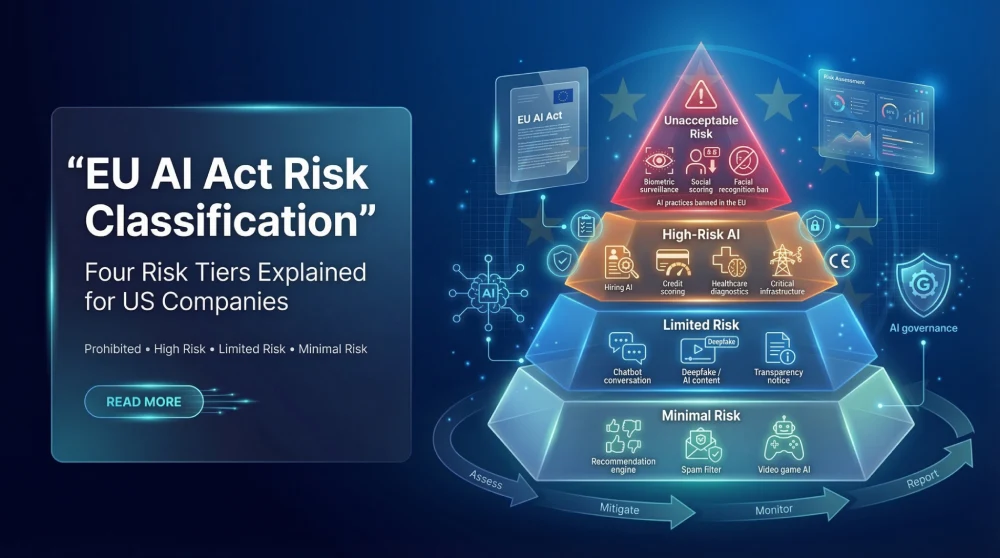
Fines of up to €35 million or 7% of global annual turnover. That is the price tag the European Union has attached to non-compliance with its Artificial Intelligence Act, and it applies to any company whose AI systems touch the EU market, regardless of where that company is headquartered. For US businesses selling SaaS products […]
ISO 31000 vs AI Risk Management: Gaps, Alternatives & When to Use Each
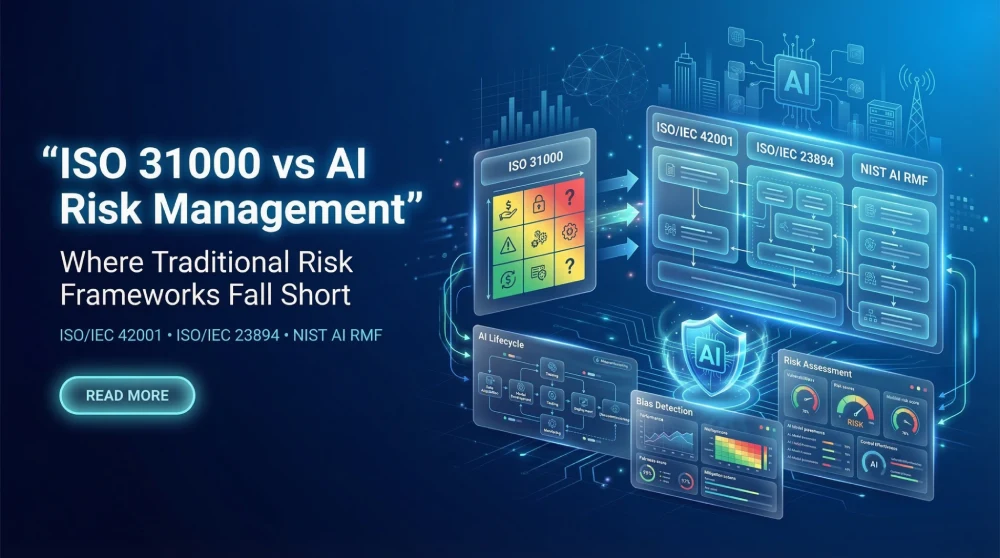
A 2025 study from the Infosys Knowledge Institute found that 95% of enterprises have experienced at least one AI-related incident, yet only 2% meet what researchers classify as responsible AI gold standards. That gap between AI adoption and AI risk maturity is where frameworks matter most. Many U.S. organizations reach for ISO 31000, the established […]
ISO/IEC 42001 Risk Management Requirements: What U.S. Organizations Need to Know
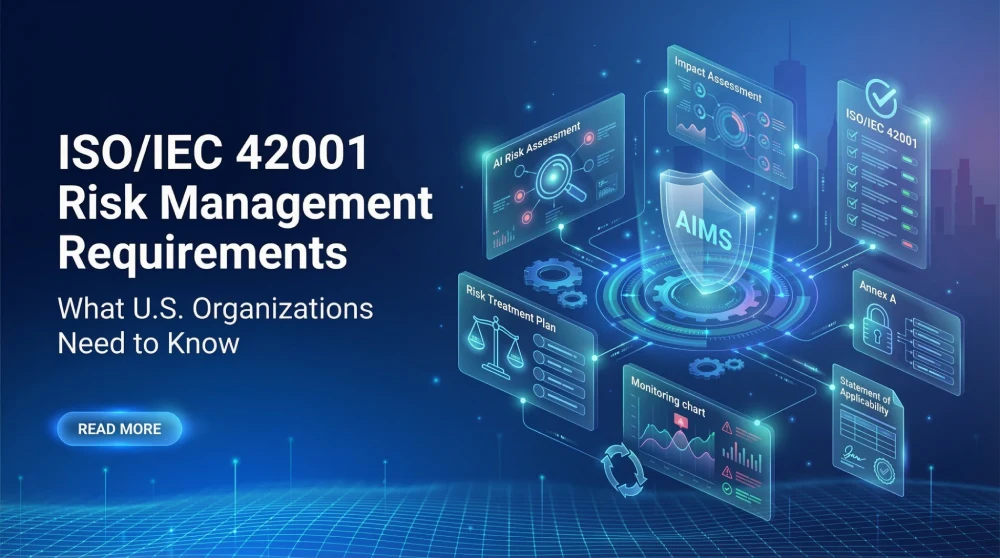
In Deloitte’s 2025 State of Generative AI in the Enterprise survey, 38% of respondents identified regulatory compliance as the top barrier to deploying AI, a figure that climbed 10 percentage points in a single year. For U.S. organizations building or buying AI systems, the question is no longer whether governance matters but which framework to […]
AIGP vs ISO 42001 Courses: Which AI Governance Certification Should You Choose?
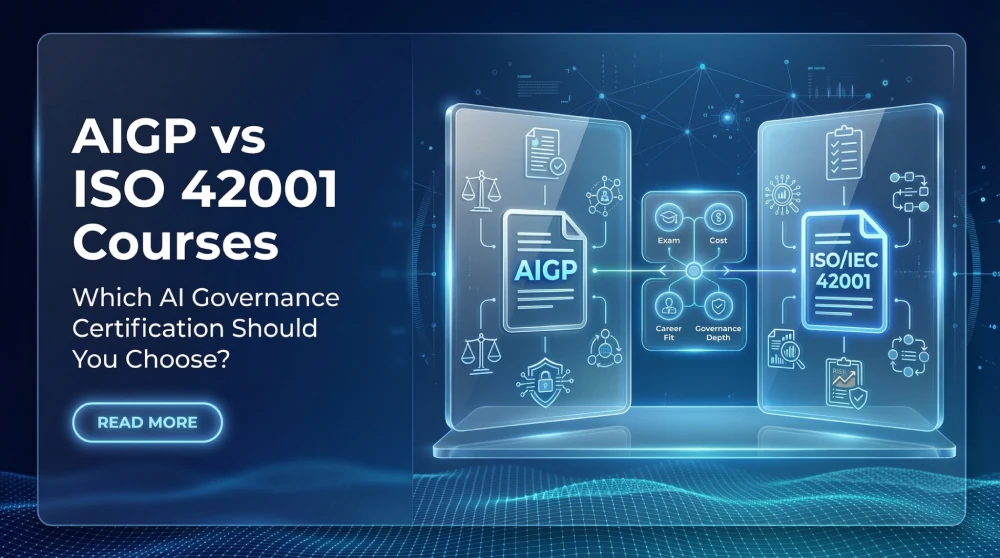
Over 4,000 professionals signed up for the IAPP’s AIGP certification within its first year of availability, while enrolments in ISO/IEC 42001 Lead Implementer and Lead Auditor courses have surged across PECB, GAICC, and other providers worldwide. That spike in demand tells us something: AI governance is no longer a niche concern. It is a professional […]
Global AI Governance Comparison 2026: EU AI Act vs NIST AI RMF vs ISO/IEC 42001
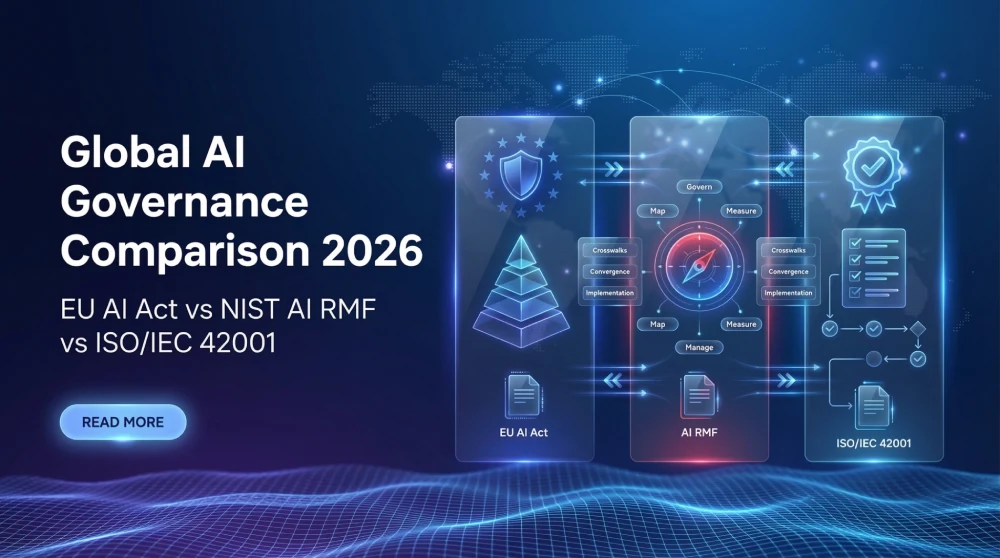
Three frameworks now dominate every serious conversation about AI governance. The EU AI Act is binding law with enforcement beginning in August 2026. The NIST AI Risk Management Framework is the de facto US governance standard that federal agencies, procurement teams, and enterprise customers increasingly expect. ISO/IEC 42001 is the first certifiable international standard for […]